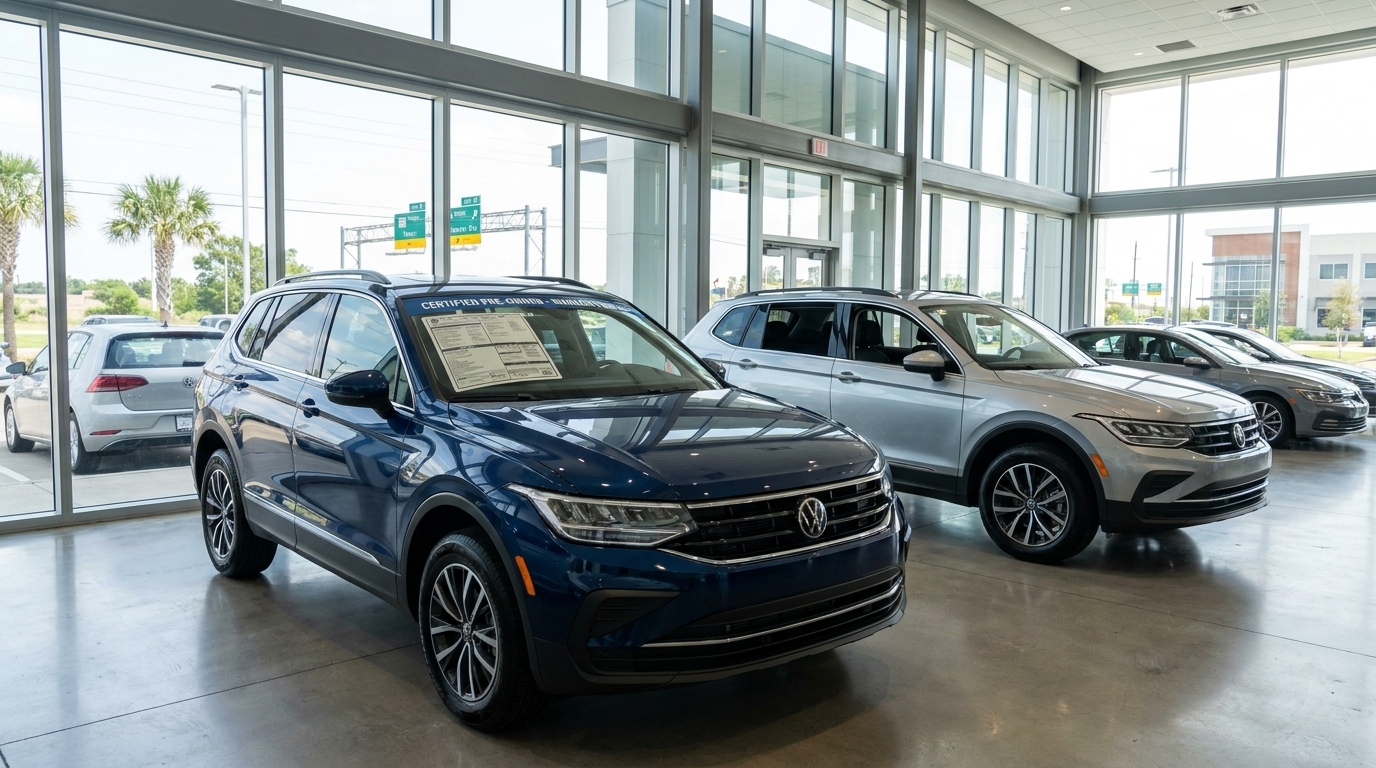
Flood Damage & Trade-In Value in Clear Lake, TX
How hurricane and flood damage affects your car's trade-in value in Clear Lake, TX — title brands, appraisal math, and what to do before you trade.
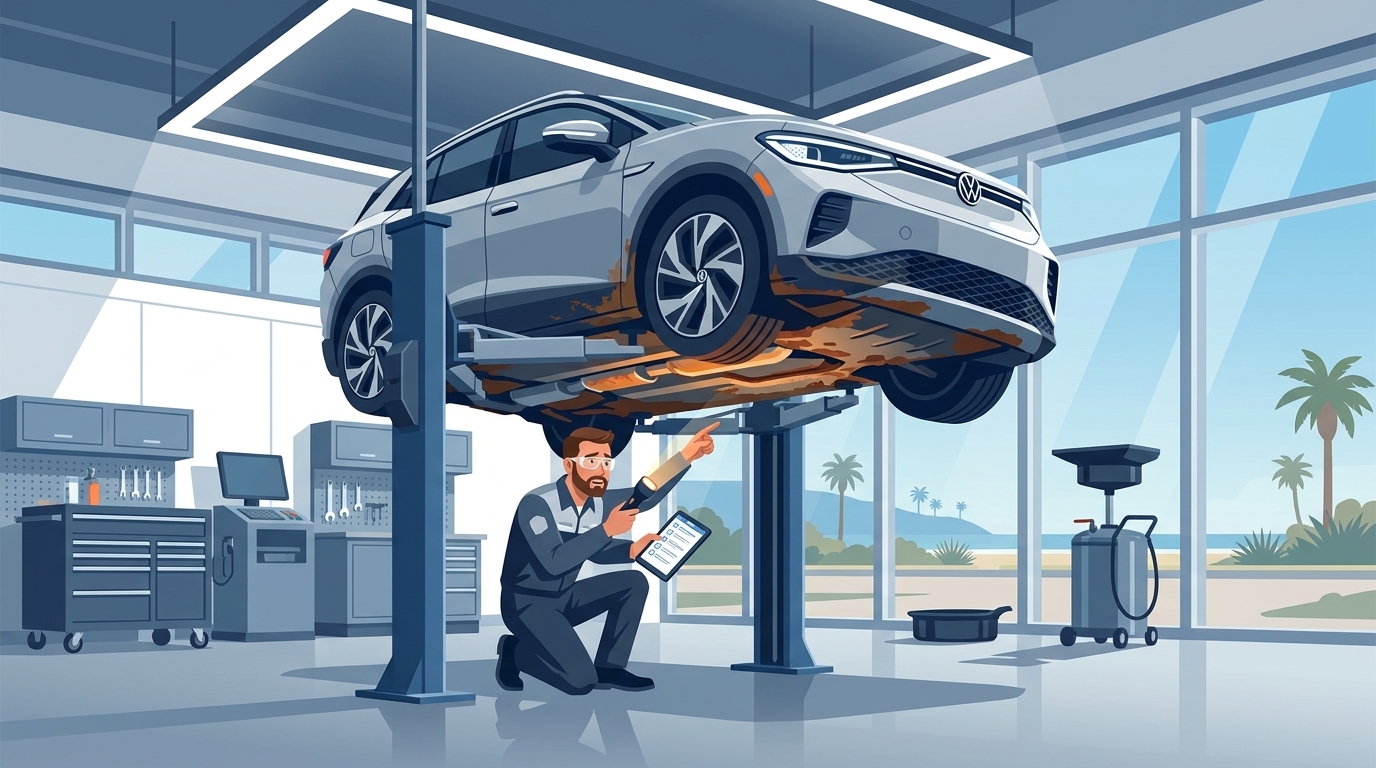
Flood or hurricane damage typically drops a vehicle's trade-in value by 40% to 70% versus a clean-title comparable, and a salvage or nonrepairable title brand from the Texas Department of Motor Vehicles can eliminate ordinary road-use trade-in value entirely. In Clear Lake, TX — sitting between Galveston Bay and Houston, inside one of the most storm-exposed corridors in the country — even undisclosed prior flood exposure will surface at appraisal and reset your negotiating position.
That's the short answer. The longer answer, below, is what actually happens to your appraisal, why salt water hurts more than fresh, and how to protect the value you still have.
How does flood or hurricane damage affect trade-in value in Clear Lake, TX?
Flood damage shifts the appraisal from a market-comparable pricing exercise to a risk and title exercise. A properly rebuilt vehicle with documented repairs typically trades at 30% to 60% of a clean-title comparable, a salvage vehicle needing work at 10% to 35%, and a nonrepairable-branded vehicle at parts or scrap value only. The exact discount depends on title status, damage severity, and documentation.
In practice, appraisers in Clear Lake — including the used-car team at Volkswagen of Clear Lake — start with a clean-title baseline for your year, trim, and mileage, then subtract for title branding, inspection and reconditioning cost, and a risk discount for hidden corrosion or electrical failure that may show up months later. Salt-water exposure from Galveston Bay surge produces a bigger long-term penalty than a freshwater street-flood event, because chloride corrosion keeps advancing inside connectors, modules, and structural seams long after the car dries out.
What title brands does Texas apply to storm-damaged vehicles?
Texas uses four principal designations under Transportation Code Title 7 and TxDMV rules: salvage (repair cost exceeds pre-damage value; not eligible for ordinary road use until rebuilt), rebuilt salvage (repaired and eligible for registration but permanently branded), nonrepairable (restricted to parts or scrap), and a flood notation that can accompany a salvage brand when damage was caused exclusively by water.
These brands are not disclosures you can wash away by re-titling in another state. Texas records them in the title history, and the National Motor Vehicle Title Information System (NMVTIS) is designed to prevent title washing across jurisdictions. A car that entered Louisiana or Florida with a flood or salvage notation should carry that history into Texas. Appraisers in the Bay Area Houston market run VIN checks against NMVTIS, insurance-loss records, and auction data as a matter of routine — a clean-looking Texas title alone does not establish that a vehicle was never flooded.
Why does salt water hurt Clear Lake trade-in values more than freshwater flooding?
Salt water accelerates corrosion inside electrical connectors, control modules, brake components, wiring harnesses, and structural fasteners, and that corrosion continues progressing after the car appears dry and repaired. Freshwater flooding creates mold, electrical, and delayed-failure risk, but salt intrusion carries a larger and more permanent valuation penalty because the failures often surface months or years later.
This matters specifically in Clear Lake because the neighborhoods closest to the water — around NASA Parkway, Nassau Bay, El Lago, and Seabrook — see storm surge as well as rainfall flooding during named systems. A car flooded by Clear Creek overflow is a different appraisal problem than one submerged by bay surge. Buyers and appraisers here know the difference, and they price it in.
How does an appraiser value a flood-damaged trade-in?
The appraiser establishes a clean-title baseline from wholesale and retail comparables, subtracts inspection and reconditioning cost, applies a risk discount for hidden corrosion or future warranty and insurance limitations, and lands on a residual value tied to auction, parts, or rebuilt-vehicle comparables. There is no Texas schedule that fixes a dollar deduction for a flood or salvage brand — the number is market-driven.
The table below shows the planning ranges most Clear Lake dealers work from. These are heuristics, not quotes:
| Vehicle status | Indicative trade-in position vs. clean-title comparable |
|---|---|
| Clean title, no known storm damage | ~70%–100% of market baseline |
| Repaired flood vehicle, rebuilt/salvage title | ~30%–60% |
| Salvage vehicle requiring repair | ~10%–35% |
| Severe or salt-water damage, uncertain repairability | Below 20% (parts/auction) |
| Nonrepairable title | No road-use trade-in value; parts/scrap only |
What should you do before trading in a possibly flood-affected car?
Pull your title history, gather every repair invoice, and get an independent inspection focused on the four things that drive the discount: electronics and modules, corrosion at wiring and undercarriage, restraint-system integrity, and visible water lines in seats, carpet, and spare-tire wells. Missing documentation is what turns a repairable trade into a parts-value trade.
A few practical points for Clear Lake sellers:
- Time your trade around hurricane season. The Atlantic season officially runs June 1 through November 30. Supply of damaged inventory rises after a major storm, but usable inventory can tighten because local vehicles are lost or displaced — that shift affects both what your car is worth and what you'll pay to replace it.
- Disclose known damage. Texas motor-vehicle dealer rules and consumer-protection law require accurate disclosure of material damage. An undisclosed flood history discovered at appraisal costs you the deal and the goodwill.
- Get a written appraisal, not a verbal number. The appraisal should identify the clean-title baseline, the specific deductions, and the residual value. Volkswagen of Clear Lake and other Gulf Freeway dealers along I-45 will put the math on paper if you ask.
- Bring both keys, all modules, and service records. Missing keys and undocumented electronic repairs push the appraisal toward auction-recovery pricing.
Frequently asked questions
Does a Texas flood notation ever come off the title?
No. Salvage, rebuilt-salvage, nonrepairable, and flood notations recorded by the Texas Department of Motor Vehicles become part of the permanent title history and follow the vehicle through subsequent transfers. A rebuilt-salvage vehicle can return to legal road use after meeting Texas requirements, but the prior brand remains disclosed on the title record and in NMVTIS reporting.
Can I trade in a car with a salvage title in Clear Lake, TX?
Sometimes, but the value reflects parts, auction, or rebuild economics rather than retail comparables — typically 10% to 35% of a clean-title equivalent. A salvage vehicle cannot ordinarily be operated on public roads until it is rebuilt and processed under TxDMV rules, so most retail-focused dealers will either decline the trade or wholesale it to a specialist buyer.
How do dealers detect undisclosed flood damage?
Appraisers run the VIN through NMVTIS, insurance-loss databases, and auction records, then inspect for water lines under seats and carpet, silt in the spare-tire well, corrosion on unpainted underbody metal and seatbelt retractors, and moisture inside headlight and taillight housings. Musty odor, rust on exposed screws inside the cabin, and mismatched electrical behavior are common tells.
Is my car worth less if it was near a flood but not submerged?
Only if there's evidence of water intrusion, corrosion, or an insurance flood claim tied to the VIN. A vehicle that was evacuated ahead of a storm or parked on higher ground carries no title consequence. Keep evacuation records, photographs, and any insurance correspondence showing no claim was paid — that documentation protects your clean-title valuation at appraisal.
Should I repair flood damage before trading in, or trade as-is?
For most Clear Lake sellers, trading as-is with full documentation nets more than partial repairs. Cosmetic fixes without addressing modules, harnesses, and corrosion can look like concealment and hurt trust. If the car qualifies for a total-loss insurance settlement, the settlement plus a title-branded trade usually beats out-of-pocket repair on an older vehicle. Get an appraisal both ways before deciding.
Where can I get a flood-damaged car appraised in Clear Lake, TX?
Any franchised dealer along the I-45 Gulf Freeway corridor between Clear Lake and League City can appraise a storm-affected trade-in. Volkswagen of Clear Lake at 3310 Gulf Freeway in League City appraises trade-ins with clean, branded, and questionable title histories and will document the deduction math. Bring your title, service records, keys, and any insurance or repair paperwork tied to the flood event.
The bottom line for Clear Lake sellers
Storm exposure is a fact of life on the Bay Area Houston side of I-45, and it's priced into every used-car appraisal here in a way it isn't inland. The value you protect is the value you can document — clean title history, complete service records, honest disclosure, and an independent inspection when the history is uncertain.
Readers in Clear Lake, TX who want a written appraisal on a storm-affected vehicle, or who are shopping a clean-title replacement, can reach Volkswagen of Clear Lake at 3310 Gulf Freeway, League City, TX 77573, by phone at (832) 432-7969, or online at https://www.vwofclearlake.com/ to get started.