Luxury Car Maintenance: Service Requirements and Cost Planning Guide
Plan luxury car maintenance costs with confidence. A 2026 guide to premium car maintenance schedules, service intervals, and budgeting for Clear Lake drivers.
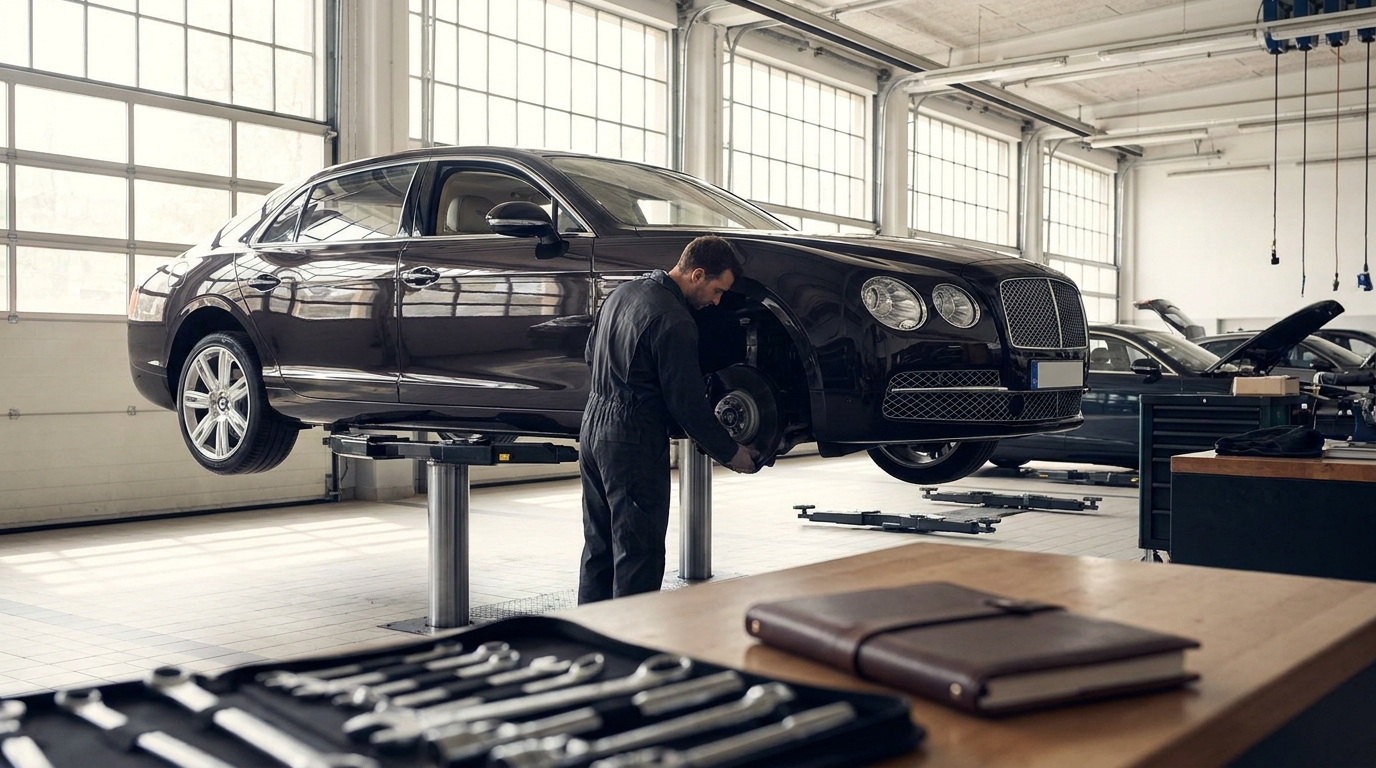
If you've recently moved up to a luxury vehicle — or you're considering one — the maintenance question tends to arrive faster than the first oil change. Premium cars deliver an experience that mainstream vehicles simply can't match, but that engineering comes with its own service rhythm and cost structure. Understanding both before you write the first service check makes ownership far more enjoyable.
This guide breaks down what luxury car maintenance actually costs in 2026, how premium service schedules differ from standard ones, and what Clear Lake drivers should plan for given our specific climate and driving conditions.
Why Luxury Car Maintenance Costs More
Luxury vehicle service requirements aren't just standard maintenance with a higher invoice. The work itself is genuinely different. Premium engines often use synthetic-only lubricants with specific viscosity ratings, advanced air suspension systems require periodic calibration, adaptive damping shocks have their own service intervals, and electronic systems demand manufacturer-grade diagnostic tools to read properly.
Parts cost more because they're engineered to tighter tolerances. Brake rotors on a performance sedan, for example, may use composite or carbon-ceramic materials that cost three to five times more than standard cast iron. Cabin air filters with HEPA-grade filtration, run-flat tires, and adaptive headlight assemblies all carry premium price tags simply because the components themselves are more sophisticated.
Labor rates also reflect the training required. Technicians working on luxury European or high-end Japanese vehicles typically hold manufacturer-specific certifications that require ongoing recertification, and the diagnostic equipment dealerships invest in to support those vehicles isn't cheap.
Typical Annual Maintenance Cost Ranges in 2026
Costs vary widely by brand, model year, and how the vehicle is driven, but here's a realistic framework for planning purposes in 2026:
- Entry-level luxury (compact sedans, small SUVs): $900 to $1,500 per year for routine service
- Mid-tier luxury (mid-size sedans, mid-size SUVs): $1,500 to $2,800 per year
- High-performance or flagship vehicles: $2,800 to $5,000+ per year, with major service intervals occasionally pushing well above that
These figures cover scheduled maintenance — oil changes, filter replacements, brake fluid flushes, transmission service, and inspections. They do not include tires, which on a luxury vehicle often run $1,400 to $2,400 for a full set, or unexpected repairs outside warranty.
Premium Car Maintenance Schedule: What to Expect
Most luxury manufacturers structure their service intervals around a two-tier system: a minor service roughly every 10,000 miles and a major service every 20,000 to 30,000 miles. Some brands use condition-based monitoring instead of fixed mileage, where the vehicle itself tells you when service is due based on driving patterns.
Minor Service (Annually or ~10,000 miles)
- Full synthetic oil and filter change
- Tire rotation and pressure check
- Multi-point inspection including brakes, suspension, and fluids
- Cabin and engine air filter inspection
- Software update check for infotainment and drivetrain modules
Major Service (Every 2-3 years or ~30,000 miles)
- Brake fluid flush and replacement
- Coolant system service
- Transmission fluid service (varies by drivetrain)
- Spark plug replacement on most gasoline engines
- Differential and transfer case service on AWD models
- Cabin air filter replacement
Long-Interval Service (60,000-100,000 miles)
- Timing components inspection or replacement where applicable
- Suspension bushings and air suspension diagnostics
- Fuel system cleaning
- Battery health testing, especially on hybrid or mild-hybrid systems
Climate Considerations for Clear Lake Drivers
High-end auto care in our part of the Gulf Coast region carries some specific considerations that drivers in milder climates simply don't deal with. Clear Lake summers regularly push heat indexes into triple digits, and that thermal stress takes a toll on luxury vehicles in ways worth planning for.
Coolant condition matters more here than in cooler regions — by the time you hit late summer, marginal coolant can lead to overheating events that damage aluminum engine components. We typically recommend Clear Lake drivers have coolant tested annually rather than waiting for the manufacturer's mileage-based interval, especially before peak summer heat arrives.
Battery life also runs shorter along the Gulf Coast. The combination of extreme heat and the parasitic draw from the electronics in modern luxury vehicles means batteries that are rated for five years often need replacement at three to four years here. Having the battery load-tested at every service visit is genuinely useful, not optional.
Hurricane season brings its own concern. If your vehicle has been driven through standing water — common on streets near Clear Lake itself, around the Bay Area Boulevard corridor, or anywhere drainage backs up after a tropical system — a post-event inspection of brake components, wheel bearings, and any low-mounted electronics is worthwhile even if everything seems fine. Salt water intrusion in particular can cause corrosion that surfaces months later.
Humidity also affects cabin air quality. Cabin filters in Clear Lake vehicles tend to load up with mold and mildew faster than the manufacturer's interval suggests, especially on vehicles that sit outdoors. Replacing the cabin filter annually rather than every 20,000 miles is a small expense that meaningfully improves the in-cabin experience.
How to Reduce Luxury Car Maintenance Costs Without Cutting Corners
There's a meaningful difference between saving money on maintenance and deferring maintenance, and the second one almost always costs more in the end. That said, there are legitimate ways to manage the spend:
- Stay on schedule. Skipping a $180 brake fluid flush can lead to $1,200 in caliper work two years later. The schedule exists because it's cheaper than the alternative.
- Use the right oil. Cut-rate synthetic blends in an engine that calls for full synthetic with a specific certification will shorten engine life. The savings aren't real.
- Address small issues immediately. A worn control arm bushing left alone becomes a worn control arm, then uneven tire wear, then an alignment issue. Catching it early is dramatically cheaper.
- Consider a prepaid maintenance plan. Many luxury manufacturers offer plans that bundle the first several services at a discount versus pay-as-you-go.
- Keep records. A documented service history protects resale value, which on luxury vehicles often represents the largest single ownership expense.
Frequently Asked Questions
Is it worth servicing a luxury car at the dealership versus an independent shop?
For routine work like oil changes, a qualified independent shop can do good work. For anything involving manufacturer software, advanced driver assistance system calibration, air suspension, or warranty-covered repairs, dealership service is usually the right call. The diagnostic equipment and software access matter on modern luxury vehicles in ways they didn't a generation ago.
How much should I budget for maintenance in the first five years of luxury ownership?
For a mid-tier luxury vehicle, planning $8,000 to $14,000 across five years for scheduled maintenance, plus tires and brakes, is a realistic range. Performance models and flagships can run higher.
Does extended warranty coverage make sense on a luxury car?
It depends on the model's reliability record and how long you plan to own the vehicle. On models with complex air suspension, twin-turbo engines, or advanced electronics, extended coverage often pays for itself. On simpler models with strong reliability, it's less essential.
How often should I have my luxury vehicle inspected beyond scheduled service?
An annual comprehensive inspection — separate from oil-change-interval checks — is a smart habit, particularly heading into Gulf Coast summer when cooling and electrical systems are about to be stressed.
Does condition-based monitoring mean I can skip scheduled maintenance visits?
No. Condition-based systems track oil life, brake wear, and fluid quality, but they don't replace an annual eyes-on inspection by a trained technician. Gulf Coast heat, humidity, and flood exposure create conditions the vehicle's sensors can't fully evaluate. Treat the system's alerts as a minimum threshold, not a ceiling.
How does luxury car maintenance differ for hybrid and plug-in hybrid models?
Hybrid and plug-in hybrid luxury vehicles generally skip some engine-related intervals — fewer oil changes on plug-in models that run predominantly on electricity — but they add battery health checks, high-voltage system inspections, and cooling system service for the battery pack. Overall scheduled costs are often similar to or only slightly below their gasoline equivalents.
Planning Your Service Strategy
Luxury ownership rewards a proactive approach. The drivers who enjoy their vehicles longest and spend the least over the ownership period are the ones who treat the service schedule as a baseline, adjust for local conditions, and build a relationship with a service department that knows the vehicle's history.
Clear Lake drivers who want a service partner familiar with both luxury vehicle requirements and the realities of Gulf Coast ownership can reach Volkswagen of Clear Lake at https://www.vwofclearlake.com/ to discuss service planning, schedule an inspection, or review what your specific vehicle needs over the next ownership year.