Trade-In Values at League City Dealerships: What to Expect in 2026
How League City, TX dealerships appraise trade-ins, calculate offers, and handle title transfers — plus what buyers should expect from the process.

If you're planning to trade a vehicle at a dealership along the I-45 corridor between League City and Clear Lake, the appraisal you receive isn't a mystery number pulled from thin air. It's the output of a fairly predictable process — one shaped by wholesale auction data, reconditioning costs, current lot inventory, and a set of Texas-specific title and tax rules that every licensed dealer has to follow. Understanding what goes into that number, and what documentation surrounds it, is the difference between accepting the first offer and knowing whether it's competitive.
Here's what League City buyers should actually expect when they roll onto a dealer lot with a trade.
How Dealerships Calculate Trade-In Offers
Every dealer appraisal starts with the same three questions: what will this vehicle sell for at wholesale, what will it cost to make retail-ready, and does it fit our lot? The math flows from there.
Appraisers typically pull recent auction comps from Manheim (the large auction facility that serves Gulf Coast dealers, including Houston-area operations north of League City) and cross-reference them against Black Book or MMR wholesale values. From that baseline, they subtract anticipated reconditioning — tires, brakes, detailing, mechanical work, and any body repairs. What's left is roughly the ceiling of what the dealer can pay while preserving a workable margin.
A few factors move the number more than buyers expect:
- Lot fit. A clean, low-mileage Volkswagen traded at a VW dealer often appraises stronger than the same car traded at a brand that would wholesale it. Dealers pay more for vehicles they can retail themselves.
- Condition photos and history reports. Carfax hits — accidents, salvage branding, odometer inconsistencies — pull the number down measurably. A clean history and service records push it up.
- Current inventory needs. If a dealer is thin on a particular model, the appraisal reflects that demand. If they already have six on the lot, expect a wholesale number.
- Regional demand. In the Clear Lake and League City area, trucks and midsize SUVs tend to move quickly given the mix of commuters, boat owners around Clear Lake and Kemah, and families in Tuscan Lakes and Mar Bella. Coupes and small sedans generally appraise closer to auction value.
The Texas Trade-In Tax Credit — What It Actually Does
Texas is one of the states where trading in a vehicle produces a genuine tax benefit at the dealership. Under Texas Comptroller guidance, the taxable amount for motor vehicle sales tax is the sales price of the purchased vehicle minus the agreed trade-in allowance, provided the trade-in is a qualifying motor vehicle actually transferred to the dealer.
Practically, that means if you buy a $35,000 vehicle and trade one appraised at $15,000, you pay Texas motor vehicle sales tax on $20,000 — not on the full $35,000. This is a materially different treatment than states like California, where sales tax applies to the full purchase price regardless of trade-in. It's one reason a slightly lower trade offer at a dealership can still net out ahead of a higher private-party sale once tax savings are factored in.
Two caveats matter here:
- No trade-in tax credit is allowed when the customer doesn't actually transfer a vehicle to the dealer. "Paper" trades don't qualify.
- The trade must be a qualifying motor vehicle under Texas law. Salvage or branded titles have to be handled under separate salvage and rebuilt vehicle rules before resale.
What Should Appear on Your Buyer's Order
Under TxDMV requirements, the buyer's order and retail installment contract at a Texas dealership must separately state:
- The cash price of the vehicle being purchased
- The trade-in allowance
- The payoff amount on any lien encumbering the trade-in
- The net trade difference
- The sales tax basis
If any of those lines are missing, blended together, or shown as a single "net" figure without breakdown, that's a red flag. Ask for a corrected buyer's order before signing. When a trade carries negative equity — you owe more than the car is worth — the allowance and lien payoff must be shown separately, and the amount financed has to reflect both the new vehicle price and the negative equity being rolled forward.
Title Transfer and the 30-Day Rule
Once you trade a vehicle, the dealer is required to obtain the existing Texas title (or out-of-state equivalent), properly assigned by the owner. If there's a lien, the dealer must obtain payoff information, pay the lienholder as agreed, and secure a release of lien before reselling the vehicle.
On the purchase side, dealers must submit a completed title application (Form 130-U), applicable sales tax and fees, and supporting documentation to the county tax assessor-collector within 30 calendar days of the date of sale. Missing that window can create registration headaches for the buyer, so it's reasonable to ask a dealer how quickly they typically file and to follow up if you haven't received registration confirmation within a few weeks.
How to Compare Trade-In Offers Across League City Dealers
Getting more than one appraisal is the single most useful thing a League City buyer can do. Offers vary — sometimes by hundreds, occasionally by thousands — because each dealer weighs inventory needs, brand fit, and reconditioning costs differently.
A few practical guidelines:
- Get written offers, not verbal estimates. and gives you leverage.
- Compare the trade allowance separately from the new-vehicle price. Dealers can inflate one and deflate the other to reach the same net. Line-item comparison is the only fair method.
- Confirm the tax basis. The trade allowance shown on the buyer's order is what actually reduces your Texas motor vehicle sales tax. A high verbal trade number that doesn't appear cleanly on the buyer's order isn't giving you the tax benefit.
- Ask about payoff handling if you have a lien. The dealer should commit in writing to pay off the lienholder within a specific timeframe.
- Factor in convenience. A trade-in nets out the tax savings, handles the title work, and pays off your lien in one transaction. Private-party sales can yield more gross but require you to manage those steps yourself through the appropriate county tax office.
Trading a Volkswagen (or Toward One) in the Clear Lake Area
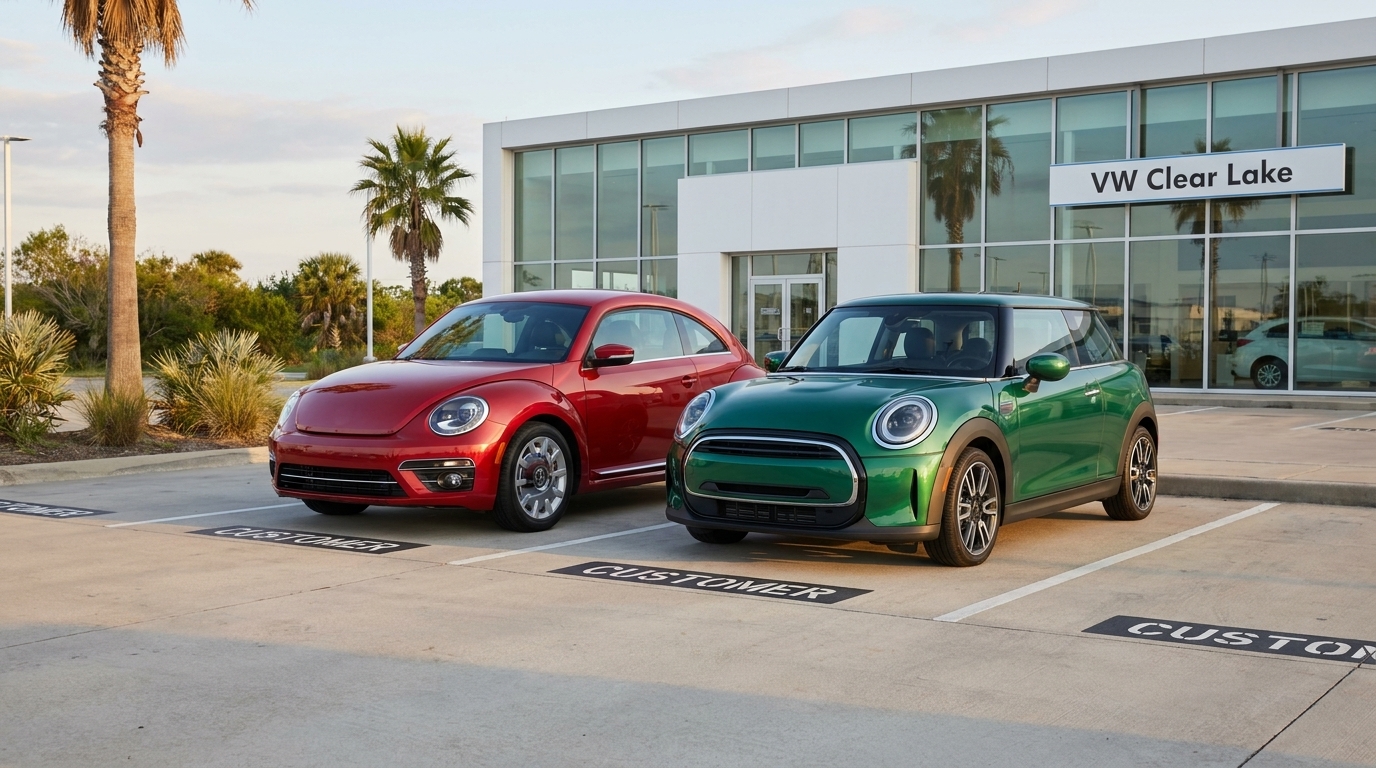
If your current vehicle is a Volkswagen — or if you're shopping for one — a franchised VW store in the Clear Lake area is usually the strongest venue for both sides of the transaction. Franchised dealers can certify pre-owned VWs, absorb them into CPO inventory, and typically pay closer to retail than a non-VW store that would wholesale the same car. Volkswagen of Clear Lake, located just north of League City along the I-45 corridor, handles this kind of same-brand appraisal routinely and can walk buyers through the buyer's order line items and Form 130-U paperwork in the same visit.
Frequently Asked Questions
How long is a trade-in appraisal valid at a League City dealership?
Most dealers honor a written appraisal for several days to about a week, though the exact window varies. Wholesale values shift with auction cycles, so appraisals aren't open-ended. Ask for the expiration in writing.
Do I need to pay off my loan before trading in?
No. Under Texas rules, the dealer obtains payoff information from your lienholder and pays them directly as part of the transaction. The payoff amount and trade allowance must be shown separately on the buyer's order.
What if I owe more than the car is worth?
Negative equity is common and legally handled by rolling the shortfall into the new loan. It must be disclosed separately in the finance documents. It's worth calculating whether that's financially sensible before committing.
Does the Texas trade-in tax credit apply if I sell my car privately and then buy from a dealer?
No. The credit only applies when you actually transfer a vehicle to the dealer as part of the same transaction. A private sale followed by a dealer purchase is treated as two separate events for tax purposes.
What documents should I bring to a trade-in appraisal?
Title (or current loan/lienholder information if financed), current registration, all keys and remotes, owner's manuals if you have them, and any service records. A clean, recently washed vehicle also tends to appraise better than one that isn't presented well.
The Bottom Line for League City Buyers
Trade-in values in League City aren't random, and they aren't identical across dealers. The number you're offered reflects wholesale data, reconditioning math, brand fit, and current inventory — and the paperwork around it is governed by specific TxDMV and Texas Comptroller rules that protect you when they're followed correctly. Buyers who understand the process, get more than one written offer, and read their buyer's order line by line consistently do better than buyers who don't.
League City drivers who want a straightforward appraisal and clear documentation on the buyer's order can reach Volkswagen of Clear Lake at https://www.vwofclearlake.com/ to start the trade-in conversation, whether or not a Volkswagen is the next vehicle on the list.