VW ID. Polo GTI vs Polo GTI in Southeast Houston, TX
Compare the electric VW ID. Polo GTI to the gas Polo GTI on power, range, and daily driving — with local context for Southeast Houston commuters.
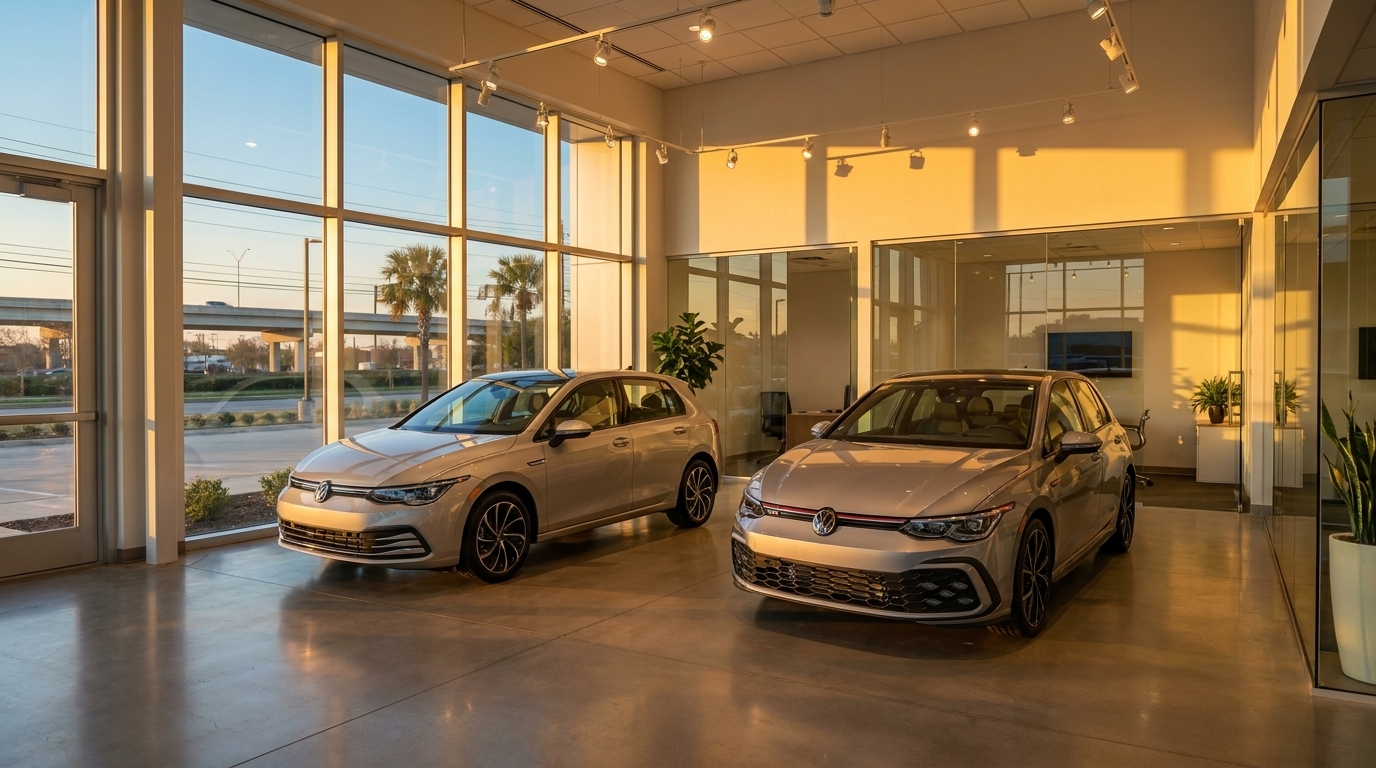
The Volkswagen ID. Polo GTI is a battery-electric hot hatch producing 226 PS with up to 424 km of WLTP range, while the gasoline Polo GTI uses a 2.0-litre turbocharged TSI making 200–207 PS with a 7-speed DSG. The electric version wins on peak power, torque delivery from rest, and running costs; the gasoline car wins on top speed (240 km/h vs. 175 km/h limited), 0–100 km/h time (6.5 s vs. 6.8 s), and refueling convenience. Neither has confirmed U.S. pricing or availability as of this writing.
What are the ID. Polo GTI and Polo GTI, and how do they differ at a glance?
The ID. Polo GTI is Volkswagen's first electric GTI-badged Polo, built on the MEB platform with a single front-mounted APP290 motor, a 52 kWh net battery, and a single-speed reduction gearbox. The gasoline Polo GTI keeps the traditional formula: a 2.0-litre turbocharged TSI four-cylinder paired with a 7-speed DSG driving the front wheels.
Both are five-seat, five-door hatchbacks. Both carry GTI-tuned suspension, brakes, and interior cues. The split is philosophical — one keeps the combustion recipe intact, the other reinterprets it electrically. Enthusiasts in Southeast Houston weighing the two on Volkswagen of Clear Lake's lot (should either arrive stateside) are effectively choosing between two different definitions of what a GTI is supposed to feel like.
Which one is more powerful — ID. Polo GTI or gas Polo GTI?
The electric ID. Polo GTI produces more peak power, at 226 PS (166 kW, roughly 223 hp), compared to the gasoline Polo GTI's 200 PS (147 kW, roughly 197 hp). Volkswagen's world premiere press materials also cite 207 PS for the gasoline car depending on the source. Peak torque, however, favors the gas car: 320 Nm versus 290 Nm for the EV.
The nuance is delivery. The gasoline GTI's 320 Nm arrives in a turbocharged band; the ID. Polo GTI's 290 Nm is available instantly from zero rpm. That's why the gas car is quicker on paper to 100 km/h — 6.5 seconds versus 6.8 seconds — but the EV often feels sharper off the line in stop-and-go traffic on the Gulf Freeway or around the Clear Lake area.
How do range and refueling compare for daily Southeast Houston driving?
The ID. Polo GTI offers up to 424 km (about 263 miles) of WLTP range from its 52 kWh net battery, consuming 14.4–16.4 kWh/100 km. The gasoline Polo GTI uses roughly 6.5 L/100 km combined (about 36 mpg U.S. equivalent, converted from the official figure) and refuels at any station in minutes. DC fast charging on the EV tops out at 105 kW.
For a Southeast Houston commuter running between Pasadena, Friendswood, and downtown, 263 miles of WLTP range comfortably covers a work week on a home Level 2 charger. Longer trips — Galveston, Austin, or the Hill Country — are where the gas car's five-minute fill-up still wins, especially during hurricane-season evacuation windows when charger queues are a real concern along I-45.
What about top speed, handling, and the GTI driving feel?
The gasoline Polo GTI tops out at 240 km/h; the ID. Polo GTI is electronically limited to 175 km/h. That gap is meaningful on an autobahn and irrelevant on the Sam Houston Tollway. What matters more day-to-day is weight distribution, steering, and throttle response — and here the two cars split.
The gas GTI is lighter over the front axle, with the familiar DSG punch between gears. The ID. Polo GTI carries battery mass low in the floor, which lowers the center of gravity but adds weight overall. Instant torque and single-speed smoothness change the character of corner exits. Neither is objectively better; they're different tools.
Head-to-head specifications
| Specification | VW ID. Polo GTI (electric) | VW Polo GTI (gasoline) |
|---|---|---|
| Powertrain | Single front motor (APP290), 52 kWh net battery | 2.0L turbocharged TSI, 7-speed DSG |
| Horsepower | 226 PS / 166 kW | 200–207 PS / 147 kW |
| Torque | 290 Nm | 320 Nm |
| 0–100 km/h | 6.8 seconds | 6.5 seconds |
| Top speed | 175 km/h (limited) | 240 km/h |
| Range / consumption | Up to 424 km WLTP; 14.4–16.4 kWh/100 km | ~6.5 L/100 km combined |
| DC fast charging | Up to 105 kW | N/A |
| Cargo (seats up) | 441 L (1,240 L folded) | Not published by VW |
| Tailpipe CO₂ | 0 g/km | 148–155 g/km WLTP |
| Starting price | Just under €39,000 (Germany) | Not published by VW |
How does pricing and ownership cost compare for U.S. buyers?
Volkswagen has published a German starting price of just under €39,000 for the ID. Polo GTI. No U.S. MSRP has been announced for either the ID. Polo GTI or the current gasoline Polo GTI, and neither has confirmed retail availability for Southeast Houston, TX from official sources. German market pricing does not reflect U.S. import duties, taxes, dealer costs, or any applicable federal EV tax credits.
What can be said with confidence: the ID. Polo GTI produces zero tailpipe emissions versus the gas car's 148–155 g/km WLTP, and electricity per mile is materially cheaper than premium gasoline in the Houston market. Maintenance on the EV is also lighter — no oil changes, less brake wear from regenerative braking. Volkswagen of Clear Lake can share current availability updates for both nameplates as U.S. product plans firm up.
Which one should you buy?
Buy the gasoline Polo GTI if your priorities are top-end speed, longer road trips without charging planning, a lower likely purchase price, and the classic turbo-DSG GTI character. Buy the ID. Polo GTI if you value the higher peak power (226 PS vs. 200 PS), instant torque, quieter cabin, lower running costs, zero tailpipe emissions, and a daily commute that fits inside 250 miles with home charging.
For most Southeast Houston commuters — driving between neighborhoods like Clear Lake, League City, and the Texas Medical Center — the ID. Polo GTI's range covers real usage patterns easily. Buyers who regularly tow, road-trip beyond charger networks, or park where home charging isn't feasible will find the gas Polo GTI still fits daily life better.
Frequently asked questions
Is the ID. Polo GTI faster than the gasoline Polo GTI?
No, not to 100 km/h. The gasoline Polo GTI reaches 100 km/h in 6.5 seconds versus 6.8 seconds for the ID. Polo GTI, and its top speed of 240 km/h significantly outpaces the electric car's 175 km/h electronic limit. The ID. Polo GTI does produce more peak power (226 PS vs. 200 PS) and delivers torque instantly from a standstill.
How much range does the VW ID. Polo GTI have?
The Volkswagen ID. Polo GTI has up to 424 km (about 263 miles) of WLTP range from its 52 kWh net battery, consuming 14.4–16.4 kWh/100 km. DC fast charging tops out at 105 kW. Real-world range in Southeast Houston conditions — highway speeds, summer air conditioning, coastal humidity — typically comes in below the WLTP figure.
Will the ID. Polo GTI be sold in the United States?
Volkswagen has not confirmed U.S. retail availability or pricing for the ID. Polo GTI as of this writing. The published starting price of just under €39,000 applies to the German market and does not reflect U.S. import duties, taxes, dealer markups, or federal EV incentives. Southeast Houston buyers should check with Volkswagen of Clear Lake for the latest U.S. product timing.
Which has more cargo space, the electric or gas Polo GTI?
The ID. Polo GTI offers 441 liters of cargo space with the rear seats up and 1,240 liters folded, per Volkswagen specifications. Official cargo figures for the gasoline Polo GTI are not published in the manufacturer materials reviewed. Third-party estimates for the gas car range from 305–351 liters, but these are not Volkswagen-issued and should be treated cautiously.
Does the ID. Polo GTI feel like a real GTI?
Volkswagen positions the ID. Polo GTI as a full GTI variant, with GTI-specific chassis tuning, styling, and interior treatment. It produces 226 PS — more than the gasoline Polo GTI's 200–207 PS — with instant torque delivery. The driving character is different from a turbo-DSG car: quieter, smoother, without gear changes. Whether that qualifies as a proper GTI is a matter of driver preference.
Is it cheaper to run the electric Polo GTI in Houston?
Generally yes, on energy costs and maintenance. The ID. Polo GTI consumes 14.4–16.4 kWh/100 km with zero tailpipe emissions; the gasoline Polo GTI uses roughly 6.5 L/100 km with 148–155 g/km CO₂. Electricity per mile in the Houston market is materially cheaper than premium gasoline, and EVs skip oil changes and reduce brake wear through regenerative braking. Insurance and purchase price are separate variables.
The bottom line for Southeast Houston shoppers
The ID. Polo GTI and the gasoline Polo GTI answer the same question — what's a fun, practical small hot hatch — with two genuinely different powertrains. The electric car brings more peak power, instant torque, zero tailpipe emissions, and lower daily running costs, at the price of a lower top speed and a range ceiling that requires some planning for longer Gulf Coast trips. The gasoline car keeps the traditional GTI feel, refuels anywhere, and holds the edge in outright acceleration and top speed.
Southeast Houston, TX shoppers who want hands-on guidance on VW's current and upcoming GTI lineup — including U.S. availability updates for the ID. Polo GTI as they're announced — can reach Volkswagen of Clear Lake at https://www.vwofclearlake.com/ to talk through the tradeoffs and see what's on the ground today.