
What Actually Happens to Your Trade-In When You Buy a Car in Friendswood, TX
A clear, Texas-specific look at how your trade-in is valued, taxed, and titled at the point of sale — and what to expect from a Friendswood dealership.
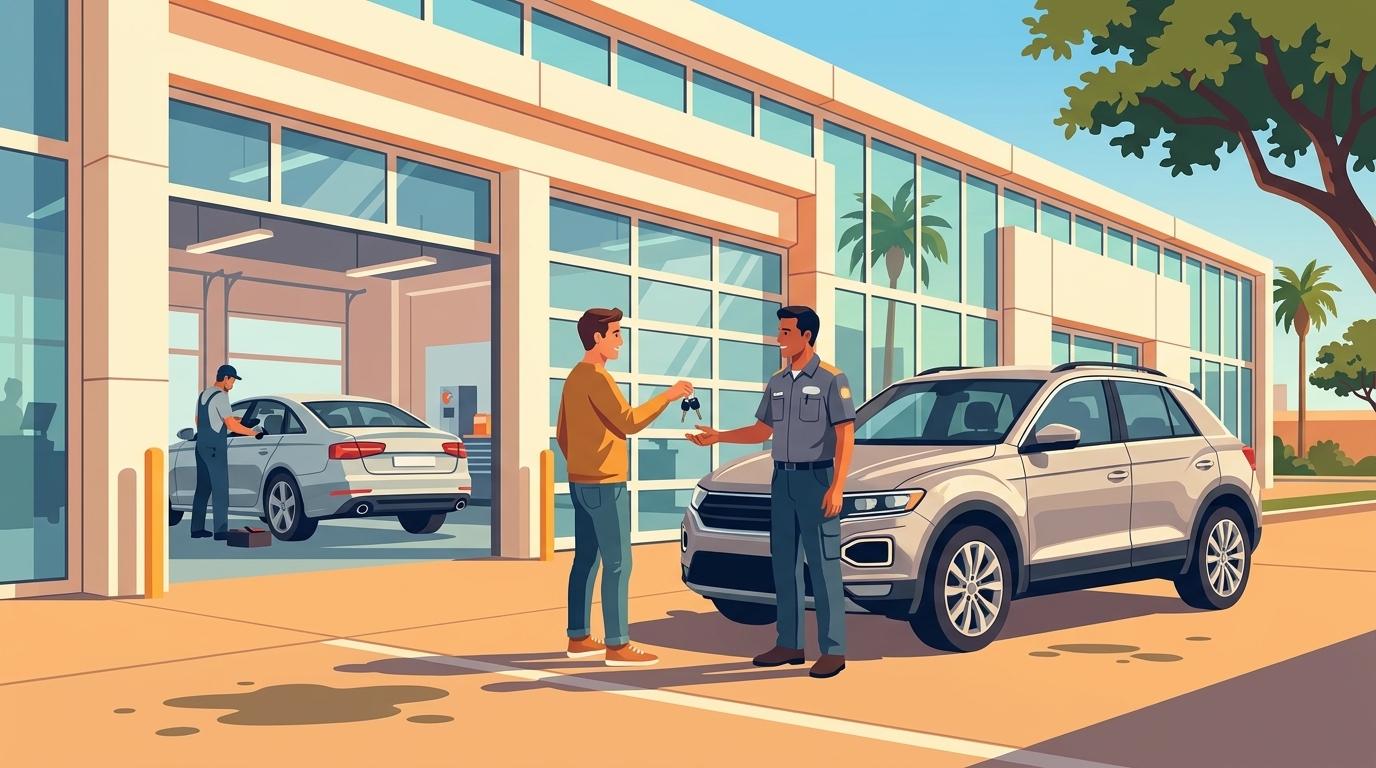
You pull into the dealership with a car you own (or still owe on), and a few hours later you drive out in something newer. In between, a lot happens to that trade-in — legally, procedurally, and financially — that most buyers never see. If you're shopping in Friendswood, TX, the details matter, because Texas has specific rules about how trade-ins reduce your sales tax, how title transfers work, and what a dealer can and cannot charge you at the point of sale.
Here's what actually happens to your trade-in from the moment you hand over the keys, and what to watch for so the numbers on your buyer's order match the law.
The Trade-In Appraisal: What the Dealer Is Really Doing
When you drop off your vehicle for appraisal, the dealer is estimating what they can resell it for — either on their own lot or at wholesale auction. Mileage, condition, service history, tire wear, accident history, and current auction data all factor in. For a Volkswagen shopper in the Clear Lake and Friendswood area, humidity, coastal air, and Gulf Coast storm exposure can also affect condition scoring — undercarriage corrosion and hail-related paint or glass damage are common local considerations.
The number the dealer offers is the trade-in allowance. That figure is the one that matters for Texas tax purposes, so it should appear as its own line item on your paperwork — not blended into the new vehicle's price.
How Trade-In Credit Works Under Texas Tax Law
This is where Texas rewards trading in at the same dealership where you're buying. Under Texas Tax Code §152.024, the state's 6.25% motor vehicle sales tax is calculated only on the difference between the new vehicle's sales price and your trade-in allowance — not on the full sticker price.
A simple example: if you're buying a Volkswagen priced at $35,000 and your trade-in allowance is $15,000, the taxable amount is $20,000. At 6.25%, that's $1,250 in state motor vehicle sales tax — versus $2,187.50 if there were no trade-in credit. That difference is real money, and it's the single biggest financial reason to trade in rather than sell privately before buying.
Two conditions must be met for the credit to apply:
- The trade-in must be a titled motor vehicle transferred to the same dealer selling you the replacement vehicle.
- Both transfers must happen as part of the same simultaneous transaction.
If you sell your old car to a private buyer on Marketplace the week before, and then walk into a dealership to buy new, there is no trade-in tax credit — each transaction is taxed separately. That's a common and expensive mistake among Friendswood shoppers who assume they'll net more by selling privately first.
What Happens if You Still Owe Money on Your Trade
Negative equity — where your payoff exceeds the trade-in allowance — is common, especially for buyers who financed with little money down. Under Texas Finance Code Chapter 348, if the negative equity gets rolled into your new loan, it must be itemized on the retail installment contract along with the cash sale price, trade-in allowance, prior lien payoff, and any other amounts paid on your behalf.
Importantly, rolling negative equity into the new financing does not increase your Texas sales tax base. Tax is still computed on sales price minus trade-in allowance, per §152.024. So even if the loan balance grows, the tax math stays clean.
The dealer will contact your lienholder, obtain a 10-day payoff quote, and send the payoff directly. You should confirm the payoff amount matches what your lender quoted you — errors here can leave a lingering balance on an account you thought was closed.
Title Transfer: The 20-Working-Day Clock
Once you sign, the dealer takes possession of your old title and prepares the paperwork for the new one. In Texas, you must provide a properly assigned Texas title with an odometer disclosure (required for vehicles under 10 model years old), and any existing lien must be released or paid off so the dealer can obtain clear title.
From the date of sale, the dealer has 20 working days to file Form 130-U (Application for Texas Title and/or Registration) with the county tax assessor-collector, along with your collected tax, title, and registration fees. In Friendswood, that filing typically goes to the Galveston County or Harris County tax office, depending on your address — Friendswood straddles both counties, and your registration paperwork follows your residence.
If the dealer misses that 20-day window, they — not you — are on the hook for the compliance failure, but you're the one waiting on plates and registration. Ask when your title work will be submitted, and get the reference number if you can.
Fees, Documentary Charges, and What's Legal
Texas caps the dealer documentary fee at $150 under Texas Occupations Code §2301.218 and Texas Administrative Code Title 43, §215.300. Anything above that is not allowed. Your buyer's order should clearly show:
- Cash sale price of the new vehicle
- Trade-in allowance
- Prior lien payoff (if any)
- Negative equity (if any)
- Motor vehicle sales tax (6.25% of sales price minus trade-in)
- Title, registration, and inspection fees
- Documentary fee (capped at $150)
If a line item doesn't match one of the categories above, ask what it is. Under Finance Code §§348.003, 348.006, and 348.124, dealers may only charge fees expressly authorized by law.
Special Situations Friendswood Buyers Should Know
A few edge cases come up often in this market:
- New Texas residents: If you recently moved to Friendswood from another state and are titling a vehicle here for the first time, you pay a flat $90 new resident tax rather than the 6.25% use tax, under Tax Code §152.0231.
- Out-of-state tax already paid: Texas allows a credit under Tax Code §152.041 for sales or use tax legally paid to another state on the same vehicle, up to the amount of Texas tax due.
- Trade allowance exceeds sales price: If your trade is worth more than the car you're buying, the taxable amount drops to zero — but Texas does not issue a refund or carry the excess forward.
- Manufacturer rebates vs. dealer discounts: Manufacturer rebates are generally excluded from the taxable sales price. Dealer discounts are baked into the sales price before the trade-in allowance is applied.
Frequently Asked Questions
Do I save on sales tax if I sell my car privately and then buy from a dealer?
No. The Texas trade-in tax credit under §152.024 only applies when the trade-in and purchase happen as one simultaneous transaction with the same dealer. A separate private sale does not generate any credit.
What if my trade-in isn't titled in Texas?
The trade-in must be a titled motor vehicle with a properly assigned Texas title to qualify for the credit.
Can the dealer charge me extra to process the title paperwork?
Beyond the actual state and county title and registration fees, the only add-on for paperwork is the documentary fee, capped at $150. There's no separate legal charge for filing Form 130-U with the county.
How long until I get my new plates and registration?
The dealer files within 20 working days, and the county typically issues plates and registration shortly after. Timing varies by county workload — Galveston and Harris County processing speeds can differ.
The Bottom Line for Friendswood Shoppers
Your trade-in is more than a down payment substitute — under Texas law, it's a tax-reducing instrument that only works when it's part of the same dealer transaction as your purchase. Read every line of the buyer's order, confirm the trade-in allowance is broken out separately, verify the tax is calculated on the difference, and make sure the documentary fee doesn't exceed $150.
Buyers in Friendswood, TX who want to walk through a trade appraisal and see the full tax and title math laid out before signing anything can visit Volkswagen of Clear Lake at https://www.vwofclearlake.com/. Bring your title, your current registration, and — if you're still financing — a recent statement with your payoff information, and the numbers will come together on paper the way Texas law expects them to.