Car Buying Mistakes That Cost You Money at the Dealership
A checklist of car buying mistakes to avoid at dealerships in League City, TX — from financing traps to trade-in pitfalls that quietly inflate the price.
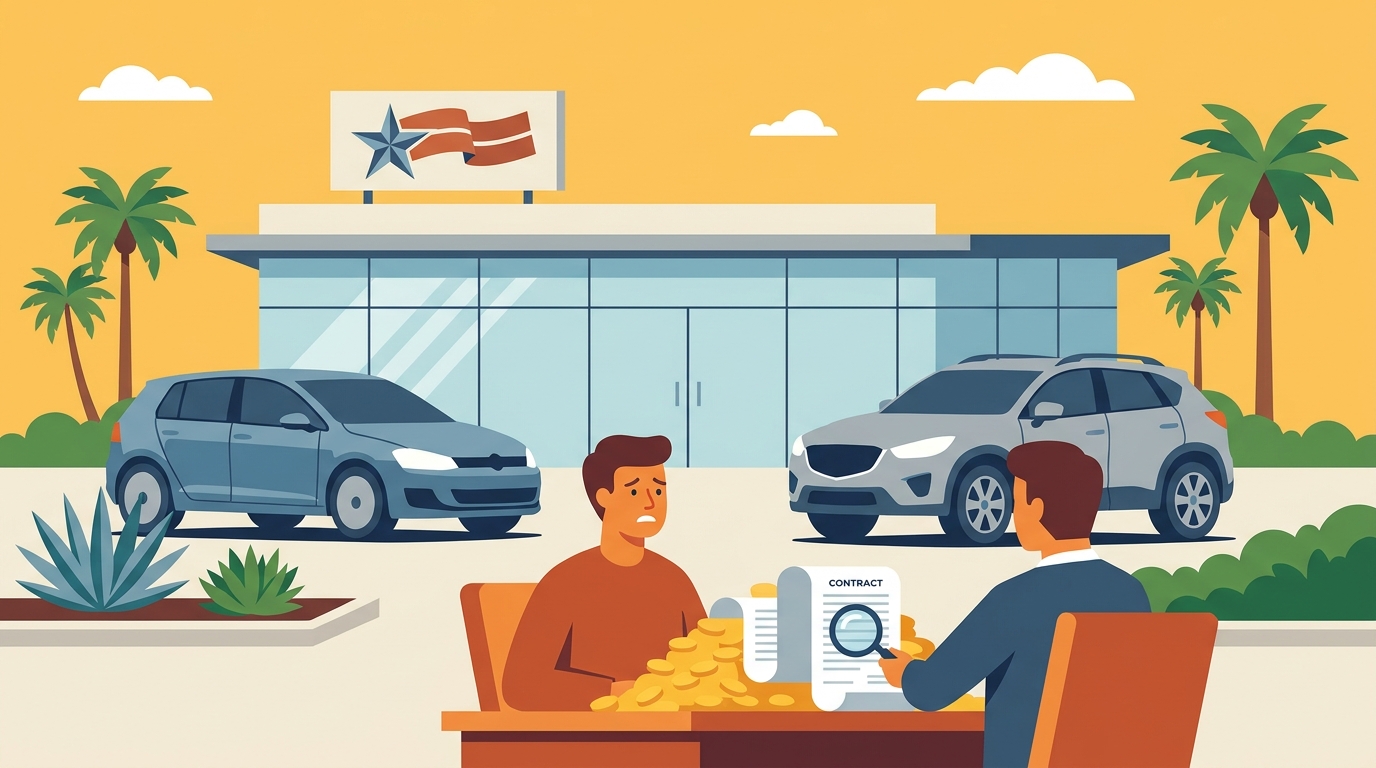
The average new vehicle transaction now involves dozens of decisions, most of them made under time pressure inside a dealership where the buyer is the least-informed person in the room. That asymmetry is where money gets lost. Buyers in League City, TX face a particularly active market — proximity to Houston, the NASA-Clear Lake corridor, and steady population growth around Bay Area Boulevard mean dealerships here see high volume and competitive pricing, which can work for or against a shopper depending on preparation.
What follows is a checklist of the most common car buying mistakes to avoid at dealerships, with an eye toward the conditions Gulf Coast Texas buyers actually encounter: humidity-related wear, hurricane-season timing, and Texas-specific tax and title rules that catch out-of-state transplants every week.
The Pre-Visit Checklist: Mistakes Made Before You Arrive
1. Skipping the financing pre-approval
Walking in without a pre-approval from a bank or credit union is the single most expensive mistake a buyer can make. Dealership finance offices earn a margin on the rate they place buyers into — sometimes called dealer reserve — and without an outside number to anchor against, buyers have no leverage. A pre-approval from a local credit union, even one the buyer doesn't ultimately use, sets a ceiling.
2. Shopping by monthly payment instead of total price
This is the oldest pitfall in the showroom. A $499 monthly payment can hide a stretched 84-month term, a rolled-in negative equity balance, and thousands in add-ons. Buyers should negotiate the out-the-door price first — vehicle price, taxes, title, fees — and only discuss financing terms afterward.
3. Not researching trade-in value independently
Texas offers a meaningful advantage here that many buyers overlook: the state's sales tax is calculated on the difference between the new vehicle price and the trade-in allowance. That makes a strong trade-in number worth more in Texas than in states like California or Virginia, where buyers are taxed on the full purchase price. Knowing the trade-in's wholesale and retail values before arriving prevents leaving that tax savings on the table.
Red Flags to Watch For During the Visit
4. Ignoring add-ons buried in the paperwork
Dealer-installed add-ons — paint protection, fabric sealant, nitrogen tires, VIN etching, theft protection packages — frequently appear pre-printed on the buyer's order. Many carry markups of several hundred percent. In League City's humid coastal climate, paint and interior protection products are sometimes pitched as essential; in reality, modern factory clear coats and standard maintenance handle Gulf Coast exposure adequately for most owners.
5. Accepting the first interest rate offered
The rate quoted in the finance office is rarely the lowest the dealership can place. Buyers with a pre-approval can ask the finance manager to beat it; reputable dealerships will try, because they still earn the sale.
6. Failing to read the buyer's order line by line
Documentation fees, dealer prep, advertising fees, and "market adjustments" can appear without verbal mention. Texas does not cap dealer documentation fees, which means they vary widely from dealership to dealership. Asking for an itemized breakdown — and pushing back on any line that wasn't part of the negotiated price — is reasonable and expected.
7. Skipping the test drive in real conditions
A loop around the block doesn't reveal much. A test drive that includes I-45 highway speeds, a stretch of broken pavement, and stop-and-go traffic on NASA Parkway tells a buyer whether the vehicle's noise levels, suspension, and transmission behavior actually fit their commute.
Mistakes Around Trade-Ins and Title Work
8. Trading in a vehicle with the loan unresolved
If the trade-in carries negative equity, that balance gets rolled into the new loan unless the buyer pays it down separately. Many buyers don't realize this until they're already underwater on the new vehicle.
9. Misunderstanding Texas title and registration timing
In Texas, the buyer is generally responsible for ensuring the title is transferred within 30 days of the sale to avoid penalties. Dealerships typically handle the paperwork, but buyers moving from out of state — common in the Clear Lake aerospace and medical corridors — should confirm in writing who is filing what, and when.
10. Forgetting about sales tax on private-party trade equivalents
Buyers who sell a vehicle privately instead of trading it in often net more cash — but lose the Texas trade-in tax credit on the new purchase. The math is worth running both ways before deciding.
What Not to Do at a Car Dealership: A Quick Reference List
- Do not disclose a target monthly payment before negotiating vehicle price
- Do not sign any document with blank fields
- Do not agree to add-ons in the finance office without a written breakdown of cost
- Do not skip the independent pre-purchase inspection on a used vehicle
- Do not assume "market adjustment" fees are non-negotiable
- Do not finalize a deal late at night when fatigue favors the dealership
- Do not waive the right to review the contract before signing
- Do not buy an extended warranty on the spot — these can almost always be added later at a lower price
Timing the Purchase for the League City Market
Local timing matters more than most national car-buying guides acknowledge. Hurricane season runs June through November along the Gulf Coast, and dealerships often see inventory disruptions and insurance complications during named storm events. Shopping before peak hurricane season — or waiting until the quieter post-holiday window in January and February — can mean better selection and more negotiating room. End-of-quarter and end-of-model-year periods also tend to produce more flexible pricing as dealerships work toward manufacturer targets.
Frequently Asked Questions
How much can buyers typically negotiate off a new car's sticker price?
It varies by vehicle, trim, and inventory levels. High-demand models may sell at or near MSRP, while slower-moving trims often have meaningful room. The negotiation that matters most is on total out-the-door price, financing rate, and add-ons — not just the headline number.
Is it better to finance through a dealership or a bank?
Either can win, depending on the rate. Securing a pre-approval from an outside lender first, then giving the dealership a chance to match or beat it, consistently produces the lowest rate.
What's the biggest red flag at a dealership?
Pressure to sign without reviewing the paperwork in full, or refusal to provide an itemized out-the-door price in writing. Transparent dealerships will hand over the numbers without hesitation.
Does Texas have a cooling-off period for car purchases?
No. Texas does not provide a statutory right to cancel a vehicle purchase after signing. That makes pre-signing review especially important — once the contract is executed, the deal is generally final.
The Bottom Line for League City Buyers
Most dealership mistakes come down to one pattern: making decisions inside the showroom that should have been made at the kitchen table. Pre-approval, independent trade-in valuation, a written out-the-door price, and a careful line-by-line review of the buyer's order eliminate the majority of the cost overruns buyers later regret.
Shoppers in League City, TX who want a straightforward, transparent buying process can reach Volkswagen of Clear Lake at https://www.vwofclearlake.com/ to review inventory, request an out-the-door quote, or ask questions about financing and trade-in valuation before visiting the dealership.