Electric vs Hybrid vs Gas: Complete Fuel Efficiency Comparison for Clear Lake Drivers
Compare electric, hybrid, and gas vehicles on fuel efficiency, costs, and real-world driving in Clear Lake. A practical 2026 guide to choosing the right powertrain.
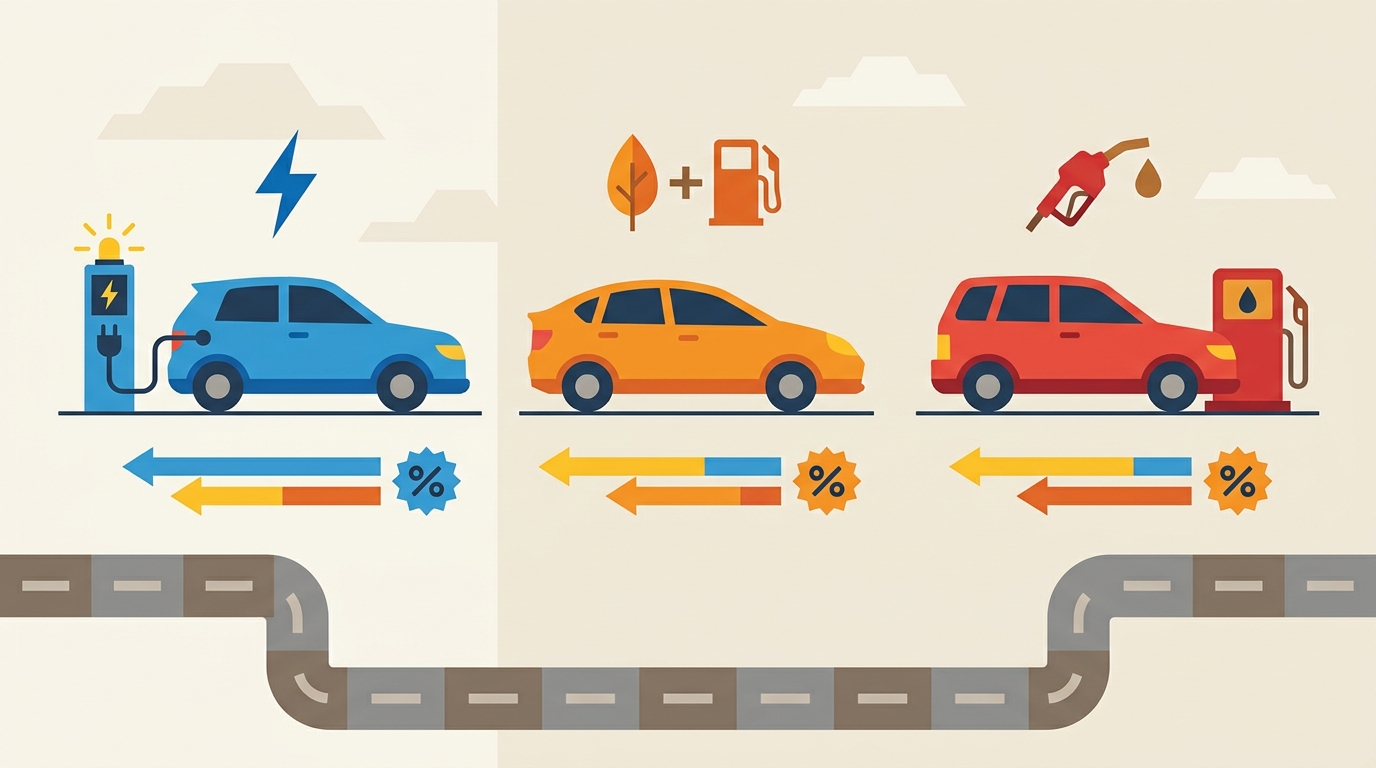
If you're shopping for a new vehicle in Clear Lake right now, the powertrain question is harder than it used to be. Gas, hybrid, plug-in hybrid, full electric — each one has a different cost structure, a different driving experience, and a different fit for the way people actually live and commute around the Bay Area Boulevard corridor and out toward NASA Parkway. This guide breaks down how the three main fuel types really compare in 2026, so you can match the technology to your driving life rather than the other way around.
The Short Answer: Which Fuel Type Is Most Efficient?
On a pure energy-cost-per-mile basis, electric vehicles win. Hybrids come second. Gas vehicles come third. But efficiency on paper isn't the same as value in your driveway — charging access, commute length, Gulf Coast heat, and how long you plan to keep the car all change the math.
Here's the practical version: if you have home charging and drive mostly local miles, an EV is hard to beat. If you mix long highway trips to Houston or Galveston with daily errands and don't want to think about charging, a hybrid is the most flexible choice. If you drive low annual mileage or need maximum towing and range with minimal upfront cost, a modern gas vehicle still makes sense.
Gas Vehicles in 2026: Still Relevant, Still Improving
Modern gasoline engines are far more efficient than the ones most drivers replaced them with. Turbocharged four-cylinders, eight- and ten-speed transmissions, and stop-start systems have pushed many compact SUVs and sedans into the 28–35 mpg combined range without any electrification.
Where gas still makes sense
- Lower upfront cost. Gas trims are typically the cheapest entry point for any given model.
- Simple ownership. Fueling takes five minutes anywhere — useful when you're heading to Kemah or down I-45 without planning around charge stops.
- Towing and payload. Heavy-duty work still leans gas (or diesel) for now.
Where gas costs more than it looks
Fuel is the obvious line item, but maintenance — oil changes, spark plugs, exhaust components, more brake wear without regenerative braking — adds up over a 5–7 year ownership window. In Clear Lake's stop-and-go traffic on NASA Road 1 and around Baybrook, that wear accelerates.
Hybrids: The Pragmatic Middle
A traditional hybrid pairs a gas engine with a small battery and electric motor. You never plug it in; the system recaptures energy through braking and uses the electric motor to assist or replace the engine at low speeds. A plug-in hybrid (PHEV) adds a larger battery and 25–50 miles of pure electric range before reverting to hybrid operation.
Why hybrids fit Clear Lake driving so well
The combination of urban stop-and-go (where electric assist shines) and long highway runs (where the gas engine takes over) is essentially the conditions hybrids were designed for. Many hybrid sedans and crossovers now deliver 45–52 mpg combined — roughly 60–80% better than a comparable gas-only model.
The Gulf Coast humidity and summer heat also matter here. Hybrids handle extreme A/C loads more gracefully than small gas engines under load, because the electric motor offsets accessory drag.
The plug-in hybrid case
If your daily drive is under 30 miles — which covers a lot of commutes between Clear Lake, League City, and the Johnson Space Center area — a PHEV can run electric most days and gas only on weekend trips. You get EV-like operating costs without range anxiety.
Electric Vehicles: The Efficiency Champion, with Conditions
EVs convert roughly three times more of their stored energy into motion than a gas engine does. Translated to operating cost, charging at home in the Houston area generally costs the equivalent of paying around $1.00–$1.50 per gallon of gasoline — a meaningful gap that compounds over years of ownership.
Where EVs shine
- Daily commuting. Plug in overnight, leave with a full battery every morning.
- Maintenance. No oil changes, no transmission service, far less brake wear.
- Performance. Instant torque makes merging onto I-45 effortless.
- Cabin comfort in Texas summers. Pre-conditioning the cabin while plugged in means stepping into a cool car without burning fuel.
Where EVs require planning
Home charging is the single biggest variable. If you own a home or have a garage with 240V access, EV ownership is straightforward. If you live in an apartment along Bay Area Boulevard without dedicated parking, charging logistics get harder, even with public DC fast chargers expanding across the region.
Long-distance road trips also take more planning. Houston-to-Dallas or Houston-to-Austin is manageable on today's charging network; less-traveled routes still require route planning.
Heat is a real factor on the Gulf Coast. EV batteries lose some efficiency in extreme summer heat, though modern thermal management systems handle Clear Lake's climate well. Expect slightly lower real-world range in August than the EPA sticker suggests.
Total Cost of Ownership: The Comparison That Actually Matters
Sticker price is the wrong place to start. A useful EV vs hybrid costs comparison weighs four buckets together:
- Purchase price (including any federal or state incentives you actually qualify for — these change frequently, so verify current eligibility before you sign)
- Fuel or electricity over your expected ownership period
- Maintenance and repairs
- Depreciation at resale
Across a typical 5-year ownership window with average Texas mileage, hybrids and EVs frequently come out ahead of gas-only equivalents on total cost — but only if the upfront premium isn't extreme and you keep the car long enough to capture the fuel savings. A short-term lease changes this calculation; a 7-year hold strengthens it.
How to Choose the Right Fuel Type for Your Driving Life
A useful car fuel type guide isn't a ranking — it's a set of questions about your specific situation:
- How many miles do you drive per year? Under 8,000 miles favors gas. Over 15,000 miles favors hybrid or EV.
- Can you charge at home? Yes opens EVs and PHEVs. No pushes you toward hybrids or gas.
- How long are your typical trips? Mostly under 40 miles favors EV or PHEV. Frequent 200+ mile trips favor hybrid.
- How long will you keep the vehicle? Longer ownership rewards electrified powertrains.
- Do you tow or haul? Heavy towing still favors gas powertrains in most segments.
Frequently Asked Questions
Are EVs really cheaper to maintain than gas cars?
Generally yes. EVs eliminate oil changes, spark plugs, exhaust systems, and most transmission service. Tires and cabin filters still wear normally, and EV-specific components like the high-voltage battery have their own service intervals, but routine maintenance is meaningfully lower.
Will a hybrid battery fail and leave me with a huge bill?
Modern hybrid batteries are designed to last the life of the vehicle, and most manufacturers warranty them for 8–10 years or 100,000+ miles. Failures outside warranty exist but are uncommon, and replacement costs have come down significantly.
How does Gulf Coast humidity affect each type?
Humidity itself isn't the issue — sustained heat is. All three powertrains run their A/C harder here, but EVs and hybrids generally handle the load more efficiently because the electric motor offloads work from the engine. Gas vehicles see the biggest mpg hit during peak summer in Clear Lake.
Is a plug-in hybrid worth the extra cost over a regular hybrid?
If you can plug in at home and your daily drive is under the PHEV's electric range, yes — you'll operate as an EV most days. If you can't charge at home, a regular hybrid captures most of the efficiency benefit without the price premium.
What about resale value?
Resale varies more by model and brand than by powertrain category. Well-regarded hybrids and EVs hold value competitively with gas counterparts, especially as fuel prices stay elevated.
Is it worth switching from a hybrid to a full EV if I already own a hybrid?
It depends on your charging situation and how many miles you drive. If home charging is available and you're logging high annual mileage, the fuel and maintenance savings from a full EV can justify the switch — especially at a trade-in or end-of-loan milestone. If your hybrid already covers your needs efficiently, the math is less compelling.
How do I know if my home electrical panel can support EV charging?
Most modern homes can support a Level 2 charger, but older panels may need an upgrade before adding a 240V outlet. A licensed electrician can assess your panel quickly and quote the work. Many EV buyers in the Clear Lake area handle this before or shortly after taking delivery, and some utility programs offset part of the installation cost.
Putting It Together
There's no universally correct answer in the electric vs hybrid vs gas question — there's only the answer that fits your driving, your home setup, and your ownership timeline. The good news for Clear Lake drivers is that the lineup of credible options in each category is broader and better than it has ever been, and Volkswagen in particular spans all three powertrain types in its current showroom.
Drivers in Clear Lake who want to compare gas, hybrid, and electric options side by side — and talk through the real ownership math for their commute and household — can reach Volkswagen of Clear Lake at https://www.vwofclearlake.com/ to schedule test drives across powertrain types or get a straightforward fuel efficiency comparison for the specific models you're weighing.